Reading Navigation

What clinical studies can, and can’t, tell us about psychedelic practice: Therapeutic misconception, clinical equipoise and why promising results still need real-world standards

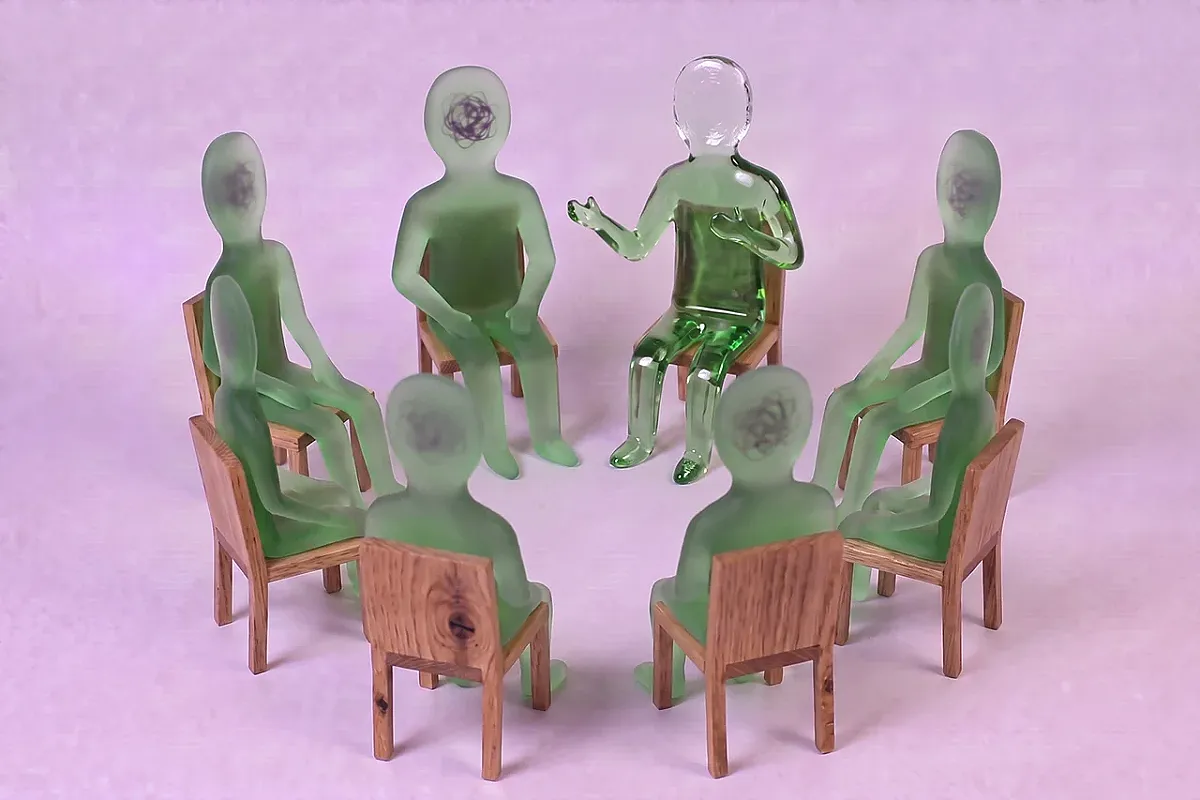
I spend much of my working life inside psychedelic clinical studies. From the outside, a psychedelic study may look, at this point in time, given the 200+ clinical trials globally and an even greater number of experimental medicine studies, a relatively simple and easy thing to deliver and do. A person receives a drug, has an experience and is assessed to see whether their symptoms improve or a specific mechanism of interest changes. From the inside, it looks very different.
There are years, in some cases many years of regulatory approvals, protocol development and risk assessment. Participants are carefully screened. The drug has a known identity, purity and dose along with quality control documents and extensive IMP brochures that document everything needed to be known about your compound of interest.
Preparation and psychological support are strictly defined in protocols, the therapy manual and discussed with senior and leading clinical psychologists, psychiatrists, and psychedelic guides. Staff are trained, boundaries are set, outcomes are measured and adverse events are recorded. Emergency procedures exist and every person on the study is trained in all aspects. These studies are meticulously designed, rigorously reviewed and conducted to the absolute highest standard – as all medical research must.
This matters though because a clinical study or trial is not real life at a smaller scale. It is a deliberately constructed environment designed to answer a specific question.
Yet when promising results leave that environment, the conditions around them are often stripped away. “Psilocybin-assisted therapy reduced symptoms in this selected group, under this protocol” becomes “psilocybin treats/cures depression, addiction…..” Evidence for a defined intervention gradually becomes a claim about a drug, a practitioner, a retreat or an entire model of care.
Two ideas from research ethics help explain why this happens: therapeutic misconception and clinical equipoise can help guide me when discussing with new staff members who join our studies about the boundaries, strengths and limitations of clinical psychedelic research.
Research is not personalised treatment
Therapeutic misconception describes the failure to appreciate the difference between clinical research and ordinary clinical care. A participant may reasonably hope to benefit from a trial, but the defining purpose of research is to produce knowledge. Procedures are determined by a protocol, not solely by what a clinician thinks is best for that individual. A participant may receive a placebo, an experimental dose or assessments that offer no direct therapeutic benefit. They may even receive a drug, such as psilocybin, but the primary outcome of the study may be brain-imaging. In which case it may not be called a clinical trial (it would be called a non-clinical trial of an investigational medicinal product [Non CTIM]).. cute name I know..), in which case patients and participants would have to be told this is not being administered to measure clinical safety or efficacy.
In psychedelics, the misconception can spread beyond the participant. The public, media and sometimes practitioners can begin to treat participation in a well-resourced study as evidence that a similar-looking service in the real world is equally safe or effective.
But resemblance is not equivalence…
A trial may exclude people with particular cardiovascular risks, histories of psychosis or mania, certain medication regimens or comorbidities (physiological or mental) that many individuals living with severe mental illness may have. It may involve medical oversight, structured preparation, trained session monitors and planned follow-up. The compound has been manufactured and tested to a defined standard. None of this is incidental background; it is part of what was tested.
The US Food and Drug Administration’s final guidance on psychedelic trials makes the point unusually clearly. It recognises functional unblinding, expectancy, psychological support, participant vulnerability and the durability of response as central scientific and safety questions. It also recommends intensive monitoring during dosing and asks how risk-mitigation strategies might translate beyond the study.
A positive trial therefore does not validate every practice that uses the same substance. Nor does it tell us that every person is suitable, that benefits will persist indefinitely, or that outcomes will be the same when screening, support and follow-up vary.
Trials reveal effects, but also uncertainty
The second idea is clinical equipoise: genuine uncertainty within the expert clinical community about which intervention is preferable. That uncertainty is part of the ethical basis for randomising people in a trial. If we already knew that one option was superior, it would be difficult to justify withholding it.
This is easily forgotten in an enthusiastic field. The very existence of a trial tells us that an important question remains open. Researchers may have a strong hypothesis and encouraging earlier data, but hope is not the same as knowledge.
Clinical trials can tell us whether a defined intervention produces, on average, a measurable benefit in a defined population. They can help estimate common adverse effects, explore dose, compare treatments and test whether change exceeds a control condition. Across successive phases, larger and longer studies can increase confidence.
They cannot answer every question at once. Psychedelic effects make blinding particularly difficult: participants and therapists can often infer who received the active drug, which may amplify expectancy and influence care. A systematic review of psychedelic trials also identified small samples, selective populations and limited reporting of expectancy, therapeutic alliance and psychotherapy fidelity. Rare harms may only become visible when an intervention reaches far more people and long-term outcomes and repeat dosing remain incompletely understood.
These limitations do not mean the findings are meaningless; they tell us how precisely the findings should be interpreted.
Science advances by reducing uncertainty, not pretending it has disappeared.
Evidence needs a real-world stage
The move from efficacy, whether something can work under controlled conditions, to effectiveness, whether it works in ordinary practice, is one of the hardest transitions in medicine.
Psychedelics make it harder still because the intervention is not easily reduced to a capsule. Preparation, setting, therapeutic relationship, music, safeguarding and integration may all shape what happens. The environment does not merely surround the intervention. In important ways, it becomes part of it and we are really still only figuring this out (see Carhart harris lab set-and setting study).
That is the gap a verification standard must reckon with. Verification cannot prove that a treatment works, guarantee an individual outcome or convert an experimental intervention into an established medicine. What it can do is make the conditions of practice visible and assessable.
Is the practitioner working within their competence and legal scope? Can they identify contraindications and respond when someone deteriorates? Are consent, boundaries and touch handled explicitly? Is there appropriate supervision, safeguarding, referral and adverse-event management? Does the practitioner distinguish evidence from personal belief and disclose uncertainty honestly?
These questions matter in hospitals, clinics, retreats and integration practices, even though the answers will not be identical in every setting. Credentials alone cannot capture them and neither can charisma, testimonials or proximity to research.
For me, this is an argument for helping psychedelic practice to adaptively and cautiously mature. I remain excited by what these treatments may offer, particularly for people who have not been helped by existing care. I have also seen how much invisible infrastructure is required to turn a powerful experience into something safe, workable and potentially therapeutic.
We should therefore ask more than, “Did it work in a trial?”.
We should instead be asking: “What exactly was tested, for whom, under which conditions, by whom and what uncertainty remains?”
Then, we must ask whether real-world practice preserves the ethical and safety scaffolding that made the evidence possible.
The most responsible conclusion is rarely that psychedelics simply “work” or “do not work.” It is more specific: there is evidence of a particular effect, in a particular population, within a particular system of care and it is for this reason that the standards we co-develop should be equally precise.