Reading Navigation
The role of ritual and psychedelic practice in the menopausal transition
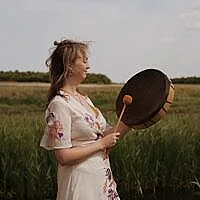

Menopause is often discussed as a set of symptoms to manage, but it can also be a time to ask who you have become and who you want to be next. In this piece, I explore how a psychedelic ceremony may help women mark that transition, and what it asks of the practitioners who hold the space.

1. More than a hormonal change
Conversations about menopause often focus on physical and psychological symptoms: hot flushes, night sweats, disrupted sleep, mood swings, reduced libido and vaginal dryness. Finding ways to relieve these symptoms is important for the physical, emotional and social wellbeing of all women (World Health Organization, 2024).
But menopause is more than just a biological transition. For many people going through the menopause, it is also a time to reconsider who they are and how they want to live.
Perhaps your children have grown up and no longer need you in the same way, while your ageing parents increasingly depend on your care. Perhaps your relationship, friendships or career are changing. Roles you have identified with for years may no longer feel right, and desires you have put aside are beginning to ask for your attention.
Menopause can also be a psychological and existential transition. A time to look back on the life you have built and consider how you want to shape the years ahead.
As Oprah Winfrey once said:
So many women I’ve talked to see menopause as an ending. […] This is your moment to reinvent yourself after years of focusing on the needs of everyone else. It’s your opportunity to get clear about what matters to you and then to pursue that with all of your energy, time and talent.
2. What happens in the body?
The transition to menopause takes place in several stages.
During perimenopause, levels of hormones such as oestrogen and progesterone begin to fluctuate. Menstrual cycles may become irregular, and women may experience hot flushes, sleep disturbances, fatigue and mood changes. This stage can last several years. Most women reach menopause between the ages of 45 and 55, although some experience it earlier, before the age of 40 (World Health Organization, 2024).
Menopause refers to the final menstrual period, usually confirmed retrospectively after 12 consecutive months without menstruation, provided there is no other medical cause (World Health Organization, 2024).
This is followed by postmenopause, when oestrogen levels generally remain lower. Some symptoms improve, while others may persist.
Every woman’s experience is different. Some move through this transition with relatively few difficulties, while others experience prolonged physical and psychological symptoms (World Health Organization, 2024).
3. From maiden to mother to wise woman
In contemporary spiritual and archetypal approaches to femininity, the female life journey is often described through three archetypes: Maiden, Mother and Crone. This model was popularised in part by British poet and writer Robert Graves in The White Goddess (1948). It later became influential in modern feminist spirituality, as described by religious studies scholar Dr Shai Feraro (2020).
The Maiden represents spring: a time of discovery, curiosity and exploring who we are and what we want from life. The Mother represents summer: a time of creating, nurturing and taking responsibility for what matters to us, whether that involves children, relationships or other meaningful pursuits. The Crone, or Wise Woman, represents autumn: a time of drawing on our life experience, knowing ourselves more deeply and living increasingly on our own terms.
These archetypes are symbolic, not fixed stages every woman must pass through.
From this perspective, menopause marks the transition from Mother to Crone. For some women, it is a time to reflect on the life they have lived, recognise what they have learned and consider what they want to carry into the next chapter.
Hormonal changes may also play a role. In The Upgrade, neuropsychiatrist Dr Louann Brizendine suggests that hormonal changes during menopause may contribute to a reduced need to please others. She describes how some women become more assertive and place greater importance on their own needs, although the proposed hormonal explanation has not been scientifically established (Brizendine, 2022).
Dutch author Susan Smit (2022) compares menopause to a snake shedding its old skin. In her letter to women going through menopause, published in Happinez, she describes how a snake must twist and wriggle to free itself from its old skin, while a new one gradually emerges.
I find this a fitting image. Entering a new phase of life sometimes means leaving behind things that have been part of us for years.
Perhaps our fertility, the beauty we associate with youth, or certain dreams and expectations we once held.
4. Menstruation and menopause as a rite of passage
Across cultures, important life transitions have been marked through rituals. Coming of age, becoming a parent and saying goodbye to a loved one can all hold a special place within a community.
In research conducted with seven Tukano-speaking communities in the Colombian Amazon, Dr Germán Zuluaga and Professor Neil Andersson (2013) documented traditional initiation rites around a girl’s first menstruation. These involve several days of ceremonies and practices, with guidance from female mentors and traditional healers.
Within these communities, the first menstruation marks a new stage of life, recognised through cultural practices passed down through generations.
In Māori perspectives on menopause, the concept of ruahinetanga connects this stage of life with wisdom, leadership and the passing of knowledge to younger generations.
In contemporary Western societies, few widely shared rituals mark this stage of life. Much of the attention focuses on symptoms and medical options, with less consideration given to what menopause might mean personally or spiritually.
5. What can a psychedelic ceremony offer?
For some women, a psychedelic ceremony may offer a way to consciously mark this transition. During the altered state of consciousness brought about by psychedelics, emotions, memories and aspects of ourselves that may have received little attention in everyday life can come more clearly into awareness.
For example, in my practice, I sometimes meet women who have spent much of their lives caring for others. Not only as mothers, but also in their relationships, friendships and work. They may feel responsible for other people’s needs and wellbeing, sometimes at the expense of their own.
During a psychedelic ceremony, some women report becoming more aware of how this pattern has shaped their lives, though this is based on practitioner experience rather than research. They may begin to recognise how much of their identity has become connected to being there for others, and what it might mean to step outside that familiar role.
Of course, every woman’s experience is different. But for someone who consciously chooses to mark this transition, a ceremony may offer space to reflect on questions such as:
- Who have I become, and which experiences have shaped me?
- What am I ready to leave behind?
- What do I want to honour and carry forward?
- What do I long for?
- And how can I live more fully as the woman I have become?
During the ceremony, there may be room to grieve what has passed, feel gratitude for what life has brought, and explore new desires.
Like autumn, this stage of life can be a time for harvesting and letting go. A time to acknowledge what has been and make room for what is yet to grow.
The meaning of such an experience may also unfold afterwards. During integration, a practitioner can help a client explore how what she experienced relates to her daily life. Perhaps that means expressing a boundary more clearly, asking for support or making time for something she has long put aside.
6. What does this ask of a psychedelic practitioner?
For practitioners supporting women during menopause, the first consideration is physical and psychological safety.
A woman going through perimenopause or menopause may be dealing with poor sleep, fatigue, hot flushes or mood changes. Medical conditions, psychiatric history and medication may also affect the suitability and safety of a psychedelic experience.
Practical details matter too. A woman experiencing hot flushes may appreciate being able to adjust the room temperature or remove a blanket easily. These are small considerations, but they can make a difference to how comfortable someone feels in the setting.
Research into how menopause influences psychedelic experiences remains limited. A 2026 review by Dr Kim Kuypers and colleagues in Molecular Psychiatry examines how oestrogen and progesterone may influence psychedelic responses and tolerability. The authors discuss several plausible biological mechanisms, while emphasising the lack of direct clinical evidence.
Possible interactions between psychedelics and menopausal hormone replacement therapy (HRT) are also poorly understood. We do not yet know whether different hormone formulations affect psychedelic responses or introduce additional risks. For practitioners, this uncertainty calls for careful screening, appropriate medical consultation and clear communication with clients about what is not yet known.
Beyond these physical considerations, the personal meaning of menopause deserves attention. Themes such as ageing, sexuality, body image, changing relationships and letting go of familiar roles may emerge during a ceremony.
A practitioner working with women at this stage of life needs to be comfortable discussing these subjects and recognise how their own assumptions about womanhood and ageing may influence the support they provide.
Does it matter who supports the woman through the experience? I think it does.
For someone going through menopause, working with a practitioner who has experienced this stage of life herself may offer a particular sense of recognition. It can be comforting to speak with someone who understands certain changes from personal experience.
But shared experience alone does not make someone a skilled practitioner. A younger practitioner or one of a different gender may also offer thoughtful, competent support. What matters is their training, ability to listen and willingness to recognise the limits of their own experience.
There is another important consideration. Not every woman experiences menopause as an invitation to become a Wise Woman. Some may feel relieved, while others may experience sadness or uncertainty. A woman may not want to explore the spiritual meaning of menopause at all.
The practitioner needs to respect this. The archetypal perspective can be a useful lens, but it should never become an expectation placed on the client. The practitioner’s task is not to tell her what this transition should mean, but to support her in finding out for herself.
We have rituals to mark so many important moments in life, yet menopause often goes unrecognised. Like a snake shedding its old skin, a woman may need time to leave behind what once defined her. Perhaps menopause deserves a ritual of its own: a moment to honour the woman she has been and welcome the woman she is becoming.
Lotte Boekhout specialises in psychedelics for women, offering women a carefully held space to explore a deeper connection with themselves: lotteboekhout.nl.
This article reflects the author’s practice and perspective. It is not medical advice. If you are considering a psychedelic experience, speak to a doctor first, particularly if you have a medical or psychiatric history or take medication, including HRT. Laws on psychedelics vary by country.
References
Brizendine, L. (2022). The upgrade: How the female brain gets stronger and better in midlife and beyond. Harmony.
Elektra Health. (n.d.). Oprah Winfrey. https://www.elektrahealth.com/menopause-leaders/oprah/
Feraro, S. (2020). The rise of the fourfold goddess construct among western goddess women and feminist witches. The Pomegranate, 22(1), 1–15. https://doi.org/10.1558/POME.37570
Graves, R. (1948). The white goddess: A historical grammar of poetic myth. Faber & Faber.
Kuypers, K. P. C., Mason, N. L., Carlier, A., Totomanova, I., & Haijen-Bongers, E. C. H. M. (2026). Psychedelics and women’s mental health: The effects of female sex hormones on psychedelics’ efficacy and tolerability. Molecular Psychiatry. https://doi.org/10.1038/s41380-026-03801-2
Ministry for Women. (n.d.). Understand menopause. https://www.women.govt.nz/menopause/understand-menopause
Smit, S. (2022, April). Lieve vrouw in de overgang, deze brief is voor jou. Happinez. https://www.happinez.nl/body-yoga/brief-aan-vrouw-in-de-overgang/
World Health Organization. (2024, October 16). Menopause. https://www.who.int/news-room/fact-sheets/detail/menopause
Zuluaga, G., & Andersson, N. (2013). Initiation rites at menarche and self-reported dysmenorrhoea among indigenous women of the Colombian Amazon: A cross-sectional study. BMJ Open, 3(3), e002012. https://doi.org/10.1136/bmjopen-2012-002012