Reading Navigation

Beyond the drug: Lessons from therapists on what shapes outcomes in psychedelic-assisted therapy
FOREWORD
Psychedelic research is often framed around a simple question: do these treatments work? Over the past decade, that question has generated an exciting body of research. But as psychedelic-assisted therapy moves closer to clinical implementation, I think another question is becoming just as important: what actually determines whether someone benefits?
In my PhD research, I’ve spent the last few years trying to better understand that broader question. Our recent questionnaire study gave me the opportunity to examine it from a different perspective. We asked 158 experienced psychedelic therapists from around the world what they believe contributes to successful treatment. Despite working across clinical trials, licensed services and retreat settings, many of these clinicians consistently returned to the same themes: the therapeutic alliance, social support, psychological readiness and integration.
As the field moves beyond asking whether psychedelics can work, I think we also need to better understand how they can be delivered well. Questions around therapist training, preparation, integration and models of care may ultimately prove just as important as questions about the compounds themselves. I hope this article encourages readers to look beyond the drug and towards the broader therapeutic process that, in my view, will be essential to delivering high-quality psychedelic care.
“What makes psychedelic therapy work?”
It’s a deceptively simple question.
For many people, the answer seems obvious: the psychedelic itself. Compounds such as psilocybin and MDMA have shown remarkable promise in treating conditions including depression and post-traumatic stress disorder (PTSD) (Goodwin et al., 2022; Mitchell et al., 2023). It’s no surprise, then, that much of the public conversation has focused on the drugs themselves.
But this framing overlooks something fundamental. Psychedelic-assisted therapy (PAT) is exactly that: psychedelic-assisted therapy. These compounds may catalyse profound psychological experiences, but they do not operate in isolation. Every psychedelic session unfolds within a broader therapeutic context, one shaped by the individual’s mindset, the relationship they have with their therapist, the preparation they receive, the support available afterwards and many other factors that may influence how the experience is understood and integrated.
This idea is hardly new. Researchers have long recognised the importance of set and setting, the mindset a person brings into the experience and the environment in which it takes place (Hartogsohn, 2016). Over the past decade, research has also consistently shown that aspects of the acute psychedelic experience, such as mystical-type experiences, psychological insight and emotional breakthrough, are associated with better therapeutic outcomes across a range of psychiatric disorders (Romeo et al., 2021; Viljoen et al., 2024).
These findings have been invaluable, but they tell only part of the story. Therapists spend hours preparing participants before a dosing session, accompanying them throughout the experience and helping them make sense of what emerges afterwards. They witness first-hand why two people receiving the same drug under seemingly similar circumstances can have very different therapeutic trajectories. Yet surprisingly little research has systematically examined what these clinicians believe contributes most to successful outcomes.
That was the motivation behind our study “Therapist-rated predictors of response to psychedelic-assisted therapy” (Viljoen et al., 2026). We surveyed 158 therapists from around the world working across clinical trials, licensed services, retreat settings and other practice environments. We asked them to rate the factors they believed were most important for achieving positive long-term therapeutic outcomes.
Across diverse settings, therapists repeatedly emphasised four interconnected elements: a strong therapeutic relationship, psychological readiness before treatment, supportive social relationships and meaningful integration afterwards. In other words, while the psychedelic may create an opportunity for change, experienced therapists pointed towards the broader therapeutic process as being central to whether that opportunity translates into lasting benefit.
The relationship comes first
If you asked someone unfamiliar with psychedelic therapy what determines whether treatment is successful, they might point to the dose, the molecule or the intensity of the psychedelic experience.
The therapists in our study overwhelmingly pointed somewhere else. Across all of the variables we examined, from personality characteristics and psychiatric history to preparation and dosing conditions, the therapeutic alliance was rated as the most important contributor to positive long-term outcomes. In other words, the quality of the relationship between therapist and participant was viewed as more influential than any individual patient characteristic or procedural element.
This finding aligns with decades of psychotherapy research, which has repeatedly identified the therapeutic alliance as one of the strongest predictors of treatment outcomes (Stubbe, 2018). Importantly, this association has also been demonstrated in PAT, where stronger therapeutic alliance has been associated with both more positive acute psychedelic experiences and greater improvements in depressive symptoms following psilocybin-assisted therapy (Levin et al., 2024; Murphy et al., 2022). What was striking in our findings was how consistently clinicians working with psychedelics echoed this message, despite public attention often focusing on pharmacology and altered states of consciousness. As one therapist explained: “The therapeutic alliance is probably the most underappreciated and vitally important factor in treatment response.”
Why might this relationship matter so much? Psychedelic experiences often involve profound emotional vulnerability. People may revisit traumatic memories, confront deeply held beliefs, or temporarily experience a diminished sense of self. In these moments, the therapist is not simply observing the process – they become part of the environment in which the experience unfolds.
A strong therapeutic alliance can create the psychological safety needed to explore difficult experiences, tolerate uncertainty and remain engaged when the session becomes emotionally challenging. Trust may therefore do more than make therapy feel comfortable; it may enable participants to engage more fully with the therapeutic process itself.
This also reframes the therapist’s role. Rather than simply administering a treatment, therapists actively help create the conditions in which therapeutic change can occur. The psychedelic may facilitate a period of increased psychological flexibility, but the quality of the therapeutic relationship may shape how that opportunity is navigated.
We don’t heal in isolation
The therapeutic alliance emerged as the clearest message from our study, but social support was not far behind. Together, they point to a broader theme that ran throughout therapists’ responses: the importance of relationships. Across both the quantitative ratings and therapists’ written reflections, clinicians emphasised that the social and interpersonal context surrounding PAT may play an important role in shaping long-term outcomes. As one therapist put it: “This is the most predictive variable I’ve found for response to PAT. To the point that if there is no social support, no primary object, I won’t do PAT.”
At first glance, this may seem surprising. Why should relationships with family, friends or partners influence the effects of a psychedelic? One possibility is that psychedelic therapy does not end when the acute effects of the drug wear off. The days and weeks that follow often involve reflecting on the experience, making sense of new perspectives and for some people, attempting meaningful changes in their lives. Whether those changes are sustained may depend not only on what occurred during the session, but also on the environment to which a person returns.
Supportive relationships can provide encouragement, accountability and emotional safety while difficult experiences are processed and integrated. Conversely, people returning to social isolation, conflict or unsupportive environments may have fewer opportunities to consolidate the changes initiated during therapy. Although our findings cannot determine whether social support directly improves treatment outcomes, the consistency with which therapists emphasised its importance suggests that recovery is often embedded within a broader social context rather than occurring in isolation.
These findings also have implications for how PAT might be delivered in the future. Most contemporary clinical trials use an individual therapy model, with one or two therapists supporting a single participant throughout treatment. While this approach has clear advantages, it is also resource-intensive. The extensive preparation, dosing and integration sessions required for each participant present challenges for scaling psychedelic therapies within healthcare systems.
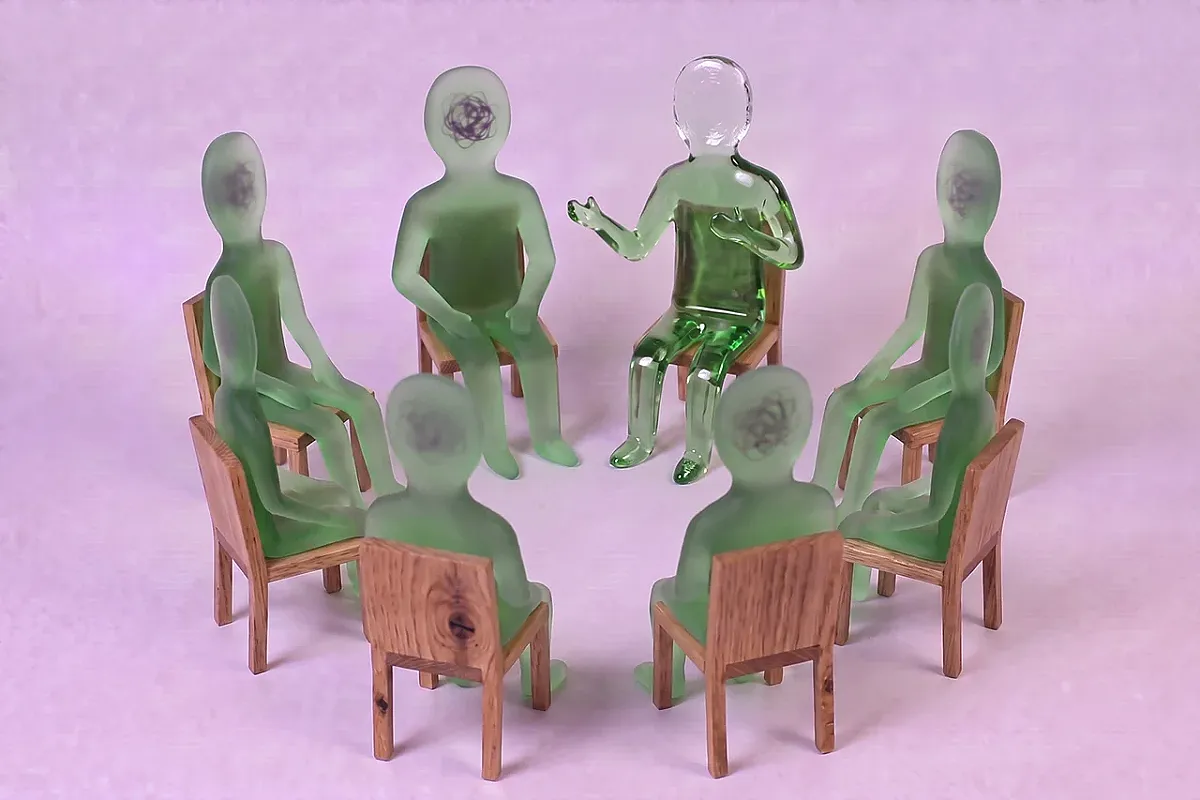
Group-based models may offer one possible alternative (Gasser, 2022). Beyond potential advantages in cost and workforce capacity, group PAT may provide opportunities for participants to support one another throughout treatment. Shared experiences can foster connection, reduce feelings of isolation and create relationships that extend beyond the therapy room.
Importantly, this peer support may complement. Rather than relying solely on the therapist for interpersonal support, participants may benefit from a broader network of relationships within the therapeutic setting. This could be particularly valuable during integration, where discussing experiences with others who have undergone similar journeys may help consolidate new perspectives and behavioural changes.
Group therapy will not be appropriate for everyone, and further research is needed to determine which models of care are most effective for different people. Nevertheless, our study highlights the possibility that therapeutic relationships extend beyond the therapist alone. The broader social environment may also play an important role in shaping how psychedelic experiences are translated into everyday life.
Psychological readiness begins before the dosing session
One of the persistent misconceptions surrounding PAT is that the most important part of treatment occurs during the dosing session itself. If the experience is sufficiently profound, it is often assumed that lasting change will naturally follow. The therapists in our study described a more nuanced picture. Across the survey, clinicians emphasised the importance of psychological readiness before treatment begins. This was not simply about meeting eligibility criteria or ensuring participants understood the practical aspects of the session. Instead, it reflected whether someone appeared prepared to engage with the therapeutic process itself.
Several characteristics were consistently viewed as favourable. Therapists placed particular importance on a person’s capacity to approach the experience with openness, to tolerate uncertainty and to let go of rigid attempts to control the experience. As one therapist reflected: “The more [they can] trust, let go and be open, generally the more they are going to be primed to get the most out of their psychedelic experience.” Moderate, well-calibrated expectations were also viewed more favourably than either unrealistic optimism or excessive apprehension. Likewise, therapists valued participants who viewed healing as an active psychological process rather than something the drug would accomplish on their behalf.
Importantly, these findings should not be interpreted to mean that successful psychedelic therapy is reserved for people who naturally possess these qualities. Instead, they point towards a mindset that therapists believe may help people engage more fully with treatment – one characterised by curiosity, flexibility and a willingness to work with difficult experiences as they arise.
This is where preparation becomes particularly important. Rather than serving as a logistical step before the “real” treatment begins, therapists described preparation as an integral part of the therapeutic process itself. It provides an opportunity to establish trust, explore expectations, clarify intentions and develop a shared understanding of what the participant hopes to achieve through therapy.
Preparation may also help cultivate the very qualities therapists identified as important. Expectations can be discussed and recalibrated. Fears can be acknowledged. Participants can begin to develop confidence in navigating challenging experiences and recognise that therapeutic change is likely to require their active engagement. Some therapists also incorporate practices such as mindfulness or breathing exercises during preparation. In some treatment protocols, breathwork is used to familiarise participants with altered states of consciousness in a safe, controlled setting while helping them develop skills for navigating intense emotional or perceptual experiences that may arise during the psychedelic session.
Interestingly, therapists in our study generally viewed four to six hours of preparation as optimal. Although this finding should not be interpreted as a prescriptive recommendation, it suggests that preparation may be less about completing a checklist than allowing sufficient time for a meaningful therapeutic relationship to develop before the dosing session.
Healing doesn’t end when the session does
If preparation helps lay the foundation for a meaningful psychedelic experience, integration is where that experience begins to take shape in everyday life. Public attention understandably focuses on the dosing session – the altered states of consciousness, emotional breakthroughs and profound personal insights that can emerge during the experience. Yet therapists in our study emphasised that what happens afterwards may be just as important.
One therapist noted: “If a client does not engage in integration, it will significantly decrease the likelihood that they will experience long-lasting benefits.” This highlights an important distinction between having a meaningful experience and making use of one. A psychedelic session may generate powerful insights, shift perspectives or bring unresolved emotions to the surface. But insight alone does not necessarily translate into lasting psychological change. Without opportunities to reflect on the experience, discuss it with others and apply those insights to everyday life, even deeply meaningful experiences may gradually lose their impact.
Integration refers to this ongoing process of making sense of the experience and incorporating it into daily life. For some people, this may involve understanding difficult emotions or re-evaluating important relationships. For others, it may mean translating new perspectives into concrete behavioural changes or simply finding language for experiences that initially felt difficult to articulate. Integration often extends well beyond the dosing session and may be supported through practices such as journalling, psychotherapy, mindfulness, time in nature, creative expression, movement (e.g., yoga or walking) and conversations with trusted friends, therapists, or integration groups (Bathje et al., 2022). Together, these practices help people reflect on their experience and gradually incorporate its insights into everyday life.
Although relatively little research has directly examined the role of integration in determining clinical outcomes, therapists viewed it as a fundamental component of PAT rather than something that occurs after treatment has finished. Preparation helps people enter the experience, the dosing session creates opportunities for psychological exploration, and integration supports the translation of those experiences into everyday life.
Not everyone benefits equally
While much of the discussion surrounding psychedelic therapy focuses on how to maximise positive outcomes, our study also asked therapists what they believed predicted less favourable responses. Their answers offered an important reminder: psychedelics are not a universal solution and the same treatment may have very different effects depending on the individual and the context in which it is delivered.
One of the clearest themes was that the absence of factors that support recovery can itself become a risk factor. Therapists consistently viewed limited social support, poor therapeutic rapport, insufficient preparation and a lack of engagement with integration as barriers to long-term improvement. They also highlighted psychological rigidity, unrealistic expectations and difficulty surrendering to the experience as characteristics that may make it harder for people to benefit from treatment. Rather than indicating that these individuals should never receive PAT, these findings suggest they may require more extensive preparation and support throughout the therapeutic process.
Interestingly, the strongest negative ratings were given to a history of non-psychedelic substance use, including not only stimulants and opioids, but also cannabis, tobacco and alcohol. At first glance, this may seem surprising given that psychedelics are currently being investigated as treatments for substance use disorders. The distinction, however, may lie in why someone is seeking treatment. A person hoping to use psychedelic therapy to overcome an addiction may differ substantially from someone with ongoing substance use who has little desire to change. As with many of the factors identified in our study, therapists appeared to place less emphasis on the diagnosis itself than on whether a person was psychologically ready and able to engage with the therapeutic process.
A therapeutic process, not just a psychedelic
One of the most interesting observations from our study is that many of the factors therapists identified as important are also potentially modifiable. While characteristics such as psychiatric history or demographics cannot be changed before treatment begins, many of the highest-rated factors reflect aspects of care that clinicians may be able to strengthen. Therapeutic relationships can be developed over time. Preparation can help cultivate realistic expectations and psychological readiness. Social support networks can be identified and where possible, reinforced. Integration can provide opportunities to reflect on and apply experiences once the acute effects of the psychedelic have subsided.
Importantly, our study does not establish that these factors cause better outcomes. Instead, it captures the collective perspectives of 158 therapists working across clinical trials, licensed services, retreat settings and other practice environments. Those observations now need to be tested prospectively alongside patient outcomes.
As psychedelic therapies continue to move towards wider clinical implementation, discussions will understandably focus on questions such as which compounds receive regulatory approval and who should have access to treatment. Those conversations are important. But our findings suggest that an equally important question is how PAT is delivered. Psychedelics may create an opportunity for change, but experienced therapists consistently pointed towards something broader: lasting benefit appears to depend not only on the compound itself, but on the therapeutic process that surrounds it.
References
Bathje, G.J., Majeski, E. and Kudowor, M., 2022. Psychedelic integration: An analysis of the concept and its practice. Frontiers in Psychology, 13, p.824077.
Gasser, P., 2022. Psychedelic group therapy. In Disruptive psychopharmacology (pp. 23-34). Cham: Springer International Publishing.
Goodwin, G.M., Aaronson, S.T., Alvarez, O., Arden, P.C., Baker, A., Bennett, J.C., Bird, C., Blom, R.E., Brennan, C., Brusch, D. and Burke, L., 2022. Single-dose psilocybin for a treatment-resistant episode of major depression. New England Journal of Medicine, 387(18), pp.1637-1648.
Hartogsohn, I., 2016. Set and setting, psychedelics and the placebo response: An extra-pharmacological perspective on psychopharmacology. Journal of psychopharmacology, 30(12), pp.1259-1267.
Levin, A.W., Lancelotta, R., Sepeda, N.D., Gukasyan, N., Nayak, S., Wagener, T.L., Barrett, F.S., Griffiths, R.R. and Davis, A.K., 2024. The therapeutic alliance between study participants and intervention facilitators is associated with acute effects and clinical outcomes in a psilocybin-assisted therapy trial for major depressive disorder. PloS one, 19(3), p.e0300501.
Mitchell, J.M., Ot’alora G, M., van der Kolk, B., Shannon, S., Bogenschutz, M., Gelfand, Y., Paleos, C., Nicholas, C.R., Quevedo, S., Balliett, B. and Hamilton, S., 2023. MDMA-assisted therapy for moderate to severe PTSD: a randomized, placebo-controlled phase 3 trial. Nature Medicine, 29(10), pp.2473-2480.
Murphy, R., Kettner, H., Zeifman, R., Giribaldi, B., Kartner, L., Martell, J., Read, T., Murphy-Beiner, A., Baker-Jones, M., Nutt, D. and Erritzoe, D., 2022. Therapeutic alliance and rapport modulate responses to psilocybin assisted therapy for depression. Frontiers in pharmacology, 12, p.788155.
Romeo, B., Hermand, M., Petillion, A., Karila, L. and Benyamina, A., 2021. Clinical and biological predictors of psychedelic response in the treatment of psychiatric and addictive disorders: A systematic review. Journal of Psychiatric Research, 137, pp.273-282.
Stubbe, D.E., 2018. The therapeutic alliance: The fundamental element of psychotherapy. Focus, 16(4), pp.402-403.
Viljoen, G., Walter, H., Bendau, A., Koslowski, M. and Betzler, F., 2025. Predictors of therapeutic response to psychedelic-assisted therapy: A systematic review. Journal of Psychopharmacology, p.02698811251389581.
Viljoen, G., Bendau, A., Walter, H., Mertens, L.J., Evens, R., Wolff, M., Herwig, U., Johnson, M., Seynaeve, M., Koslowski, M. and Betzler, F., 2026. Therapist-rated predictors of response to psychedelic-assisted therapy. Nature Mental Health, pp.1-11.