Online Screening Test for OCD

A self-assessment that screens for obsessions and compulsions across six OCD domains
Select your gender to begin:
By clicking Start, you agree to the Terms and Conditions and acknowledge the Privacy Policy
Key takeaways
  • A 3-minute OCD self-screening test with immediate results
  • Screens for symptoms of obsessions and compulsions
  • Measures symptom severity over the past month
  • Assesses symptoms across six OCD subscales
  • Designed as a self-screening test, and not a diagnostic tool
  • Provides recommended next steps based on symptom severity
  • Can track treatment progress if retaken periodically

About This Test

This is a quick 3-minute OCD screening test that assesses symptoms of obsessions and compulsions across six domains, providing instant results and personalized recommendations based on symptom severity. The assessment is completed in three steps: answer 18 questions, get instant results, and review recommended next steps.

Answer 18 Questions 

First, you will be asked 18 questions to assess symptoms of intrusive thoughts and compulsive behaviours in the past month. These questions are spread across six subscales or OCD domains, with three questions per domain:

  • Checking
  • Hoarding (now also known as a separate condition from OCD)
  • Obsessing/intrusive thoughts
  • Ordering/symmetry
  • Washing
  • Neutralizing

Each question has a five-point rating scale from 0 to 4

  • 0 — Not at all
  • 1 — A little
  • 2 — Moderately
  • 3 — A lot
  • 4 — Extremely

Get Instant Results 

After answering the questions, your score is calculated and shown immediately. Your symptom severity score can fall in any of the following categories:

  • 0 — 5: Minimal
  • 6 — 15: Mild
  • 16 — 25: Moderate
  • 26 — 40: Severe
  • 41 — 72: Extreme

Know Your Next Steps

Based on your score, the recommended next steps are displayed in your personal results. Higher scores, especially above 21 (a commonly used clinical cutoff), may indicate the need for professional evaluation by a licensed mental health professional. People who receive lower scores may still benefit from self-help strategies or professional support, especially if symptoms are distressing despite the score.

How the test works

You rate how often obsessions and compulsions occur and how much they interfere with daily life. Scores map to severity bands (none to severe) and suggest next steps: self-help strategies, therapy options, and when to seek a full OCD assessment. You can retake this OCD self-assessment to track progress.

Scientific basis

This screening tool is based on the Obsessive-Compulsive Inventory-Revised (OCI-R), a validated self-assessment tool widely used in clinical settings and scientific research to assess OCD symptoms and their severity.

Test Author

Prof. Edna B. Foa (PhD), Prof. Jonathan D. Huppert (PhD), Susanne Leiberg (PhD), Robert Langner (PhD), Rafael Kichic (PhD), Greg Hajcak (PhD), Prof. Paul M. Salkovskis (PhD). (2002). The Obsessive‑Compulsive Inventory: development and validation of a short, OCD‑related scale

Medical Reviewer

Arielle Tandowski
Public Health Professional

FAQ:

What scientific research is this OCD screening tool based on? Toggle answer

This screening tool is based on the Obsessive-Compulsive Inventory-Revised (OCI-R), a validated self-assessment tool widely used in clinical settings and scientific research to assess OCD symptoms and their severity.

Who should take an OCD test? Toggle answer

This test may be helpful if you are experiencing intrusive thoughts, images, or urges that are persistent, distressing, and uncontrollable, and are accompanied by compulsive actions or mental rituals for temporary relief. This self-test can help you identify patterns consistent with OCD symptoms and suggest next steps.

What does this OCD test measure? Toggle answer

This test measures symptoms and severity of obsessions and compulsions across six domains or subscales: checking, hoarding, obsessing, ordering/symmetry, washing, and neutralizing.

How do I interpret results? Toggle answer

Your score is a reflection of the severity of your symptoms, categorized as:
0 — 5: Minimal
6 — 15: Mild
16 — 25: Moderate
26 — 40: Severe
41 — 72: Extreme
Higher scores of 21 and above indicate a greater likelihood of OCD, and potentially the need for professional evaluation.

What are common OCD symptoms? Toggle answer

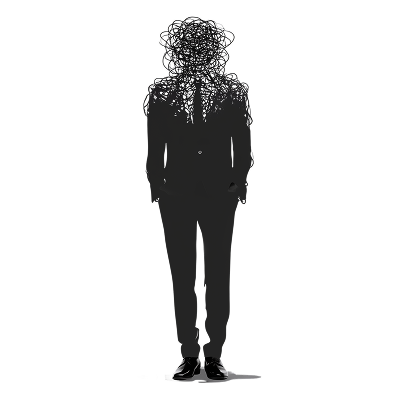
OCD has obsessions (persistent and distressing intrusive thoughts) and compulsions (repetitive behaviour or mental rituals). Obsessive symptoms can be persistent thoughts, images, or urges. Such thoughts can include worries of being contaminated or harming others. These intrusive thoughts are followed by compulsive behaviours such as constant handwashing, mental rituals in a bid to find relief, although relief is temporary. Combined obsessions and compulsions in OCD last for more than one hour daily.

Do intrusive thoughts mean OCD? Toggle answer

Intrusive thoughts are common and do not always mean OCD. However, if the intrusive thoughts are persistent, distressing, take up more than one hour daily, and are followed mainly by mental rituals, it could be what is sometimes referred to as a “pure O” type of OCD, characterized by obsessive thoughts followed by mental rituals but lacking the compulsive behavior.

How accurate are online OCD tests? Toggle answer

Online OCD tests are typically modeled after the Obsessive-Compulsive Inventory-Revised (OCI-R) and the Yale-Brown Obsessive-Compulsive Scale (Y-BOCS). Online OCD tests based on these are valid as a means of self-screening, but they do not replace professional evaluation and diagnosis. They have also demonstrated reasonable sensitivity and specificity and may help differentiate OCD symptoms from other conditions with overlapping symptoms, though no self-screening tool can fully replace professional assessment.

What is the difference between anxiety and OCD? Toggle answer

Anxiety is excessive worry about events, especially future events. Anxiety disorders and OCD have many overlapping characteristics, but the key feature of OCD is the cycle of intrusive obsessions followed by compulsions or mental rituals. However, OCD falls under obsessive-compulsive and related disorders, and is characterized by intrusive thoughts and compulsive behaviours performed to ease the anxiety associated with the intrusive thoughts.

What should I do if my OCD test score is high? Toggle answer

If your test score is high, especially if it is greater than 21, it is recommended that you seek evaluation and treatment from a licensed mental health professional. Treatment options for OCD include medications, cognitive behavioural therapy (CBT), and exposure and response prevention (ERP), etc.

How often should I retake the OCD test? Toggle answer

You may retake the OCD test periodically (every 1-3 months) to monitor your treatment progress, especially if you are seeking professional help or self-help.
This test is not a diagnostic tool. It’s designed as a screening and educational tool, not a substitute for medical advice. If symptoms persist, worsen, or you feel unsafe, contact a qualified professional, your local emergency number, or a mental health helpline.
Last Updated: 26 April 2026

Check Your Mental State

See all